Most Loved Teacher: An Embroidery Design Review
First Impressions and Visual Personality
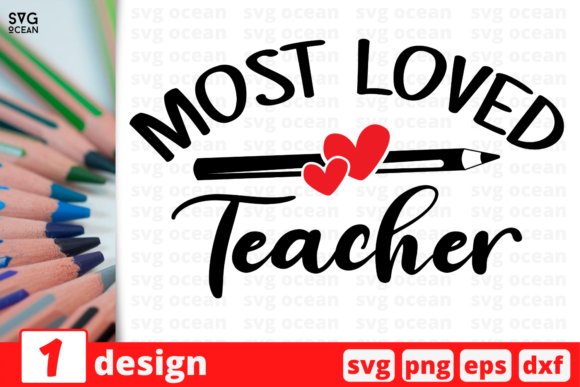
When evaluating a new machine embroidery design for my studio, I look beyond the digital preview to imagine how it will actually perform under the needle. The Most Loved Teacher graphic immediately strikes a balance between sentimentality and clean aesthetics. As a designer, I appreciate that this file is not just a collection of vectors; it carries a specific emotional weight that translates well into physical products. The layout suggests a centered, balanced composition that typically works beautifully as a focal point rather than a background element.
In the realm of Crafts and Graphics, teacher appreciation themes can sometimes feel cluttered or overly cartoonish. However, this design feels refined enough for adult apparel while remaining playful enough for classroom accessories. My first impression is that this artwork has strong potential for both personal gifting and commercial retail, provided the digitizing supports the visual intent. The lines appear distinct, which is crucial when converting from a vector format like SVG or EPS into stitch data. For an Etsy seller or boutique owner, this versatility is key. You want a design that doesn't pigeonhole you into selling only one type of item.
Real-World Application: Stitching a Custom Sweatshirt
To truly judge the viability of Most Loved Teacher, I mentally walked through a recent client project: creating custom crewneck sweatshirts for a school staff appreciation event. This is a classic use case where the design must hold up against fleece texture and frequent washing. When applying this graphic to a sweatshirt, the primary concern is stitch density. Fleece is unforgiving; if the design relies on tiny text or intricate running stitches, they will sink into the fabric pile and disappear.
For this specific sweatshirt embroidery project, I would evaluate whether the lettering in the design is bold enough to support a satin stitch column or a dense fill stitch. If the original graphic features thin script, I would advise modifying it to a thicker font before digitizing to ensure legibility. In my experience, teacher-themed apparel sells best when it feels premium and durable. A design that puckers or loses definition after one wash damages customer trust. Therefore, when using Most Loved Teacher on knit fabrics, pairing it with a high-quality cutaway stabilizer is non-negotiable to maintain the structural integrity of the embroidered patch area.
Conversely, if I were adapting this design for a canvas tote bag design, the strategy shifts. Canvas provides a stable, woven foundation that handles higher stitch counts and finer details better than stretchy knits. Here, the Most Loved Teacher motif could be rendered with more delicate line work or even combined with an applique design element to reduce stitch count while adding tactile interest. This duality makes the asset valuable for a craft business looking to maximize their product range without purchasing multiple separate designs.
Navigating Fabric Limitations and Hoop Constraints
While the theme is universally appealing, practical execution requires caution depending on your substrate. Not every fabric is a suitable canvas for this specific artwork. I have found that teacher-themed graphics often tempt makers to embroider on challenging items like baby onesies or lightweight tea towels. While baby embroidery is a lucrative niche, you must verify that the Most Loved Teacher design does not contain excessively dense areas that could make a garment stiff or uncomfortable against sensitive skin. If the design includes heavy fill stitches, consider resizing it down or removing background elements to keep the finished product soft and flexible.
Dark fabrics present another hurdle. If the design relies on color blending or subtle shading inherent in the PNG or EPS source files, those nuances may be lost when stitched in white thread on a navy hoodie. High contrast is your friend here. Before committing to a production run, test the design on a scrap of your actual dark fabric. Sometimes, what looks elegant on screen appears muddy in thread. Additionally, be mindful of hoop size. If you are working with a 4x4 hoop, ensure the design’s aspect ratio fits without requiring excessive re-hooping, which introduces alignment risks. For larger formats like pillow covers or aprons, confirm that the design scales up without distorting the proportions of the text or icons.
Commercial Viability and Brand Consistency
For creative entrepreneurs and digital product sellers, the value of Most Loved Teacher extends beyond the physical stitch. It serves as a cornerstone asset for seasonal inventory. Teacher appreciation is an evergreen market, but it peaks during specific windows. Having a reliable, professional-grade design allows you to prepare printable mockups and listings well in advance. When customers browse your shop, they are looking for professionalism. A design that looks pixelated in photos or uneven in samples will deter buyers. This graphic’s clean lines suggest it will photograph well, aiding in buyer engagement and perceived value.
However, a critical note for commercial embroidery users: always verify your licensing. The product description notes that the download includes SVG, DXF, PNG, and EPS formats compatible with Cricut Design Space, Silhouette Designer Edition, Make the Cut MTC, and Sure. These are primarily cutting and vector formats. If you intend to use this for machine embroidery, you must either digitize the file yourself or purchase a pre-digitized embroidery file version. Do not assume an SVG automatically converts to a PES or DST file without manual intervention. Respecting intellectual property and technical requirements protects your business reputation. Ensure you have the right to sell finished goods made from this design before listing them in your small shop.
Essential Designer Notes for Success
Before loading Most Loved Teacher into your machine for a client order, run through this practical checklist to ensure professional results:
- Test on Scrap Fabric: Never stitch directly onto a final product without a test run. Check for registration issues, thread breaks, or density problems specific to your machine and fabric combination.
- Evaluate Thread Colors: Review the palette against your available threads. Teacher themes often utilize bright primaries or soft pastels; ensure you have adequate contrast so the message reads clearly from a distance.
- Check Stabilizer Compatibility: Match your backing to the fabric weight. Use tear-away for stable wovens like canvas tote bags and cut-away for stretchy apparel like sweatshirts to prevent distortion.
- Inspect Small Details: Zoom in on the design file. If there is text smaller than 6mm, consider enlarging it or simplifying the font. Tiny lettering is the most common failure point in embroidery projects.
- Mockup Verification: Create black and white mockups to test visibility. If the design fails in grayscale, it lacks sufficient contrast for real-world viewing conditions.
- Licensing Confirmation: Double-check that your purchase includes commercial rights for both physical products and digital assets if you plan to resell or share modified versions.
Ultimately, Most Loved Teacher represents a strong opportunity for makers who approach it with technical mindfulness. Whether you are crafting a personalized gift for a favorite educator or building a seasonal collection for your Etsy store, success lies in respecting the relationship between the digital art and the physical medium. By paying attention to stitch density, fabric choice, and proper stabilization, you transform a simple graphic download into a cherished, high-quality handmade product that honors the profession it celebrates.