You Can't Scare Me I'm a Teacher: Design Review
As a professional designer and product reviewer, I approach every new graphic with a specific question: will this actually translate into a high-quality finished product? When evaluating You Can t Scare Me I m a Teacher, my focus shifts immediately from the digital screen to the embroidery hoop. This phrase carries a distinct personality—bold, resilient, and inherently relatable to educators. However, as any experienced maker knows, a clever sentiment only succeeds if the technical execution supports it. In the realm of Crafts and Graphics, typography-driven designs require careful scrutiny regarding stitch density, legibility, and fabric compatibility before they ever touch a needle.
First Impressions and Visual Hierarchy
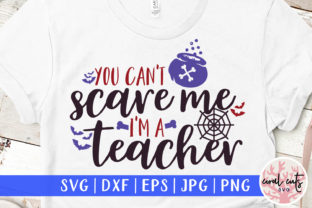
Upon opening the file, the layout of You Can t Scare Me I m a Teacher presents a strong visual hierarchy. The phrase is naturally segmented, which is excellent for embroidery digitizing. A monolithic block of text often leads to excessive jump stitches or registration issues on stretchy fabrics. Here, the separation allows for strategic placement. The mood is confident without being aggressive, making it suitable for a wide demographic ranging from kindergarten teachers to university professors. For an Etsy seller or boutique owner, this versatility is key. It does not pigeonhole the buyer into a specific niche, broadening the potential customer base for custom apparel and personalized gifts.
The design assets included are primarily SVG and DXF formats intended for cutter machines like Cricut Design Space and Silhouette Designer Edition. As an embroidery professional, I must emphasize that these vector files serve as the foundational blueprint. If you are converting this for machine embroidery, the clean lines of the SVG are advantageous. They allow for precise node editing when creating satin stitch columns or fill stitch areas. A jagged vector source results in jagged stitches; fortunately, this graphic appears optimized for smooth conversion, which is critical for maintaining professionalism in commercial embroidery projects.
Real-World Application: The Teacher Appreciation Tote
To truly evaluate this design, I mentally placed it onto a real-world project: a heavy-duty canvas tote bag intended as a teacher appreciation gift. Totes are a staple handmade product because they offer a flat, stable stitching surface. However, canvas has a distinct fabric texture that can swallow fine details. In this scenario, You Can t Scare Me I m a Teacher needs to be sized appropriately. If scaled too small, the negative space within letters like 'e' or 'a' may close up during stitching due to thread tension and fabric grain.
For this tote bag application, I would recommend testing the design at approximately 4x6 inches. This size ensures the lettering remains legible from a conversational distance while fitting comfortably within standard hoop sizes. The bold nature of the phrase lends itself well to a combination of techniques. Imagine the words "You Can't Scare Me" in a durable fill stitch to withstand the wear and tear of daily school use, while "I'm a Teacher" utilizes a raised satin stitch or even an applique design element to create tactile contrast. This mixed-media approach elevates the perceived value of the item, transforming a simple graphic into a premium embroidered patch or direct-to-garment feature.
Technical Considerations for Apparel and Stretch Fabrics
Moving from stable canvas to sweatshirt embroidery introduces new variables. Knits and fleece are unforgiving of poor digitizing or inadequate stabilization. When applying You Can t Scare Me I m a Teacher to a crewneck sweatshirt, the primary concern is push-and-pull distortion. Text-heavy designs can cause the fabric to pucker if the stitch density is too high or if the underlay is insufficient. Before listing this as a finished product in your shop, you must verify how the design interacts with the specific weight of your garment blanks.
I advise using a cut-away stabilizer rather than tear-away for any stretchy custom apparel. The permanent support prevents the embroidery from distorting after washing. Furthermore, consider the placement. Center chest is standard, but left-chest placement offers a more subtle, boutique aesthetic. If choosing the left chest, ensure the smallest letter height remains above 0.25 inches. Anything smaller risks becoming illegible once stitched out, especially if using textured threads or metallic accents. Customer trust relies on clarity; a muddy, unreadable design reflects poorly on your brand consistency and craftsmanship.
Navigating Fabric Limitations and Hoop Constraints
While You Can t Scare Me I m a Teacher is versatile, there are environments where caution is necessary. Dark fabrics present a challenge if the design relies on intricate internal detailing. High contrast thread colors are non-negotiable here. White or cream thread on navy fabric reads beautifully, but pastel threads on black may disappear visually. Always test color combinations in natural lighting before committing to production runs. Additionally, curved surfaces like caps require specialized handling. The horizontal span of this phrase might exceed the safe stitching area of a standard cap frame. In such cases, reformatting the text into a stacked arch or reducing the overall width is essential to avoid needle strikes against the cap brim or visor.
Thin fabrics, such as lightweight linen tea towels or baby clothes, also demand respect. While the sentiment is generally associated with adult educators, variations could apply to nursery decor or baby embroidery for teacher-moms. On delicate materials, dense satin stitches can act like a perforation line, weakening the fabric. Opting for running stitch outlines or lighter fill patterns preserves the integrity of the garment. Remember that baby items require frequent washing; durability is just as important as aesthetics. If the design feels too stiff or heavy against the skin, it fails as a functional product regardless of how good it looks on screen.
Professional Workflow and Quality Assurance
Integrating You Can t Scare Me I m a Teacher into a commercial workflow requires disciplined testing. Never assume a digital file is stitch-ready without verification. My standard protocol involves three steps:
- Digital Mockup Analysis: Create printable mockups in both black and white and full color. This reveals contrast issues and spacing errors that color monitors often hide.
- Stitch-Out Testing: Run a sample on scrap fabric that matches your final product's weight and weave. Inspect the backside for excessive bobbin thread or tension imbalances.
- Licensing Verification: Confirm whether your purchase includes commercial rights for selling finished products versus digital embroidery files. Protecting your business means respecting intellectual property boundaries.
For digital product sellers offering this as part of a bundle, providing clear usage guidelines adds immense value. Specify recommended hoop sizes, stabilizer types, and fabric pairings. This reduces customer support inquiries and increases positive reviews. Whether you are creating holiday embroidery for staff gifts or year-round merchandise for a craft business, transparency builds community trust.
Elevating the Finished Product Value
Ultimately, the success of You Can t Scare Me I m a Teacher lies in the maker’s attention to detail. It is more than just a witty saying; it is a test of technical proficiency. When executed correctly, with proper stabilizer, appropriate thread colors, and mindful scaling, it becomes a powerful emblem of professional pride. Buyers connect with the emotion behind the phrase, but they return for the quality of the handmade product.
As you incorporate this design into your catalog, think beyond the immediate stitch-out. Consider how it photographs for Etsy listings. Does the texture pop in macro shots? Is the messaging clear in thumbnail previews? These factors drive buyer engagement. By treating this graphic as a collaborative partner in your creative process rather than a static asset, you ensure that every tote bag, sweatshirt, or patch bearing this message meets the high standards your customers expect. Practical judgment, combined with artistic flair, is what separates hobbyists from sustainable creative entrepreneurs.