School Unicorn: A Designer’s Embroidery Review
First Impressions and Visual Personality
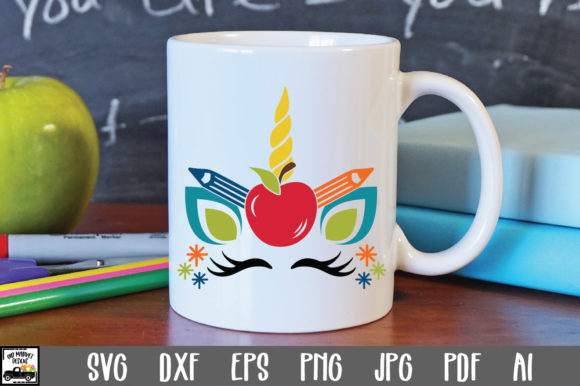
When evaluating a new machine embroidery design for my shop, I look beyond the screen preview to imagine how the artwork will actually translate into thread. The School Unicorn graphic immediately strikes a balance between whimsy and structured nostalgia. As a digital asset intended for both cutting machines and embroidery digitizing, this design carries a distinct visual personality that feels approachable yet polished. It avoids the overly chaotic aesthetic sometimes found in fantasy-themed graphics, opting instead for clean lines and recognizable school motifs that ground the unicorn concept in reality.
For those of us working in Crafts and Graphics, the versatility of the included file formats is a significant practical advantage. Having access to COLOR SVG, DXF, AI, EPS, PNG, JPEG, and PDF files means I am not locked into a single workflow. While the vector formats are excellent for creating vinyl decals or printable mockups for Etsy listings, the high-resolution raster images serve as perfect reference guides when manually digitizing or adjusting an existing embroidery file. The color separation provided in the package helps me visualize thread changes before I even hoop fabric, saving valuable production time.
Real-World Application: Stitching a Back-to-School Sweatshirt
To truly test the viability of School Unicorn, I approached it with a specific client project in mind: a custom back-to-school sweatshirt for a boutique capsule collection. My goal was to create a personalized gift item that could also serve as a staple small shop product. The design’s layout naturally lends itself to center-chest placement on crewneck sweatshirts or left-chest positioning on hoodies.
In this real-life scenario, the design performs exceptionally well as a focal point. Because the artwork features distinct shapes rather than muddy gradients, it translates beautifully into stitch. I found that treating the main body of the unicorn as an applique design reduced bulk significantly compared to a full-fill stitch version. This is crucial for sweatshirt embroidery, where excessive density can make the garment stiff and uncomfortable. The accompanying school elements—perhaps a pencil, book, or glasses icon depending on the specific variation—work best as satin stitch accents. These smaller details add texture contrast without overwhelming the primary motif.
From a business perspective, this design supports strong brand consistency. It is cute enough for children’s apparel but stylized enough to appeal to teens and young adults who appreciate nostalgic aesthetics. When photographing the finished product for social media, the clear silhouette of the School Unicorn reads instantly in thumbnails, which is vital for buyer engagement on platforms like Etsy.
Navigating Fabric Choices and Technical Constraints
While School Unicorn is versatile, experienced makers know that no design works everywhere. Understanding where to use caution is just as important as knowing where to apply it. Based on my review of the graphic's complexity, here are specific considerations for different substrates:
- Stretchy Knits and Baby Clothes: If adapting this for baby embroidery or lightweight tees, you must adjust your stabilizer strategy. The design likely has areas of concentrated detail that can cause puckering on thin jersey. Always use a cut-away stabilizer and consider a water-soluble topping to prevent stitches from sinking into the knit texture.
- Textured Fabrics and Towels: For kitchen towels or terry cloth projects, the fine details in the unicorn’s face or school accessories may get lost. In these cases, simplify the design by removing tiny running stitch elements or increasing column widths. A textured fabric requires bolder lines to maintain clarity after washing.
- Caps and Curved Surfaces: Be wary of using the full composition on caps. The vertical height of a unicorn often exceeds standard cap hoops. You may need to resize or re-digitize the School Unicorn specifically for headwear, ensuring the design stays within the safe stitch area to avoid needle strikes or distortion.
- Dark vs. Light Fabrics: Test your thread colors against both backgrounds. A white unicorn on a white sweatshirt relies entirely on shadow and texture definition, whereas on navy fabric, it pops vividly. Ensure your thread colors provide sufficient contrast so the school theme remains legible.
Commercial Viability and Product Value
For Etsy sellers and creative entrepreneurs, School Unicorn offers strong commercial potential because it bridges seasonal and evergreen niches. While obviously relevant for August and September, the design retains value year-round for homeschool groups, tutoring businesses, or library merchandise. This extends the ROI of your design assets beyond a brief sales window.
The professional presentation of this graphic also enhances perceived product value. Customers trust handmade items that look intentional and crisp. Because the source files include scalable vectors and high-res rasters, you can create cohesive branding across multiple products. Imagine offering a matching set: an embroidered patch for a backpack, a vinyl decal for a water bottle, and an embroidered polo shirt, all featuring the exact same School Unicorn artwork. This cross-product consistency builds brand recognition and encourages bundled purchases.
However, always verify licensing before scaling. Confirm whether your purchase allows for selling physical custom apparel versus digital files. Most designers permit finished goods but restrict reselling the raw digital embroidery file. Respecting these terms protects your business reputation and supports the creative ecosystem.
Essential Pre-Stitch Checklist for Makers
Before committing School Unicorn to a final product, run through this practical checklist to ensure professional results:
- Verify Hoop Size Compatibility: Measure the design dimensions in your software. Do not assume it fits your 4x4 hoop; many unicorn designs require at least a 5x7 field. Resize proportionally if necessary, but check stitch density after resizing.
- Test on Scrap Fabric First: Never stitch directly onto a sellable item without a test run. Use a scrap of the exact fabric and stabilizer combination you plan to use. Check for registration issues between applique layers and satin borders.
- Review Stitch Density: Inspect the file for overly dense areas. If converting from vector to stitch yourself, keep fill stitches under 0.4mm spacing for medium-weight fabrics to prevent bulletproof stiffness.
- Create Black and White Mockups: Before listing a new product, generate grayscale previews. This reveals whether the design relies too heavily on color differentiation. If it looks muddy in black and white, increase contrast or add outline definition.
- Confirm Thread Color Contrast: Lay actual thread spools on your target fabric. Screen colors often differ from rayon or polyester thread sheen. What looks vibrant digitally might appear dull in person.
- Check Small Detail Legibility: Zoom in to 100% view. Are the eyes, eyelashes, or text elements larger than 1mm? Anything smaller risks breaking needles or disappearing into fabric weave.
Final Thoughts for Creative Entrepreneurs
School Unicorn stands out as a thoughtful addition to any maker’s library because it respects the technical realities of embroidery while delivering genuine charm. It avoids the common pitfalls of overly complex fantasy art, making it accessible for hobbyists yet refined enough for commercial embroidery professionals. Whether you are crafting a holiday gift, stocking your shop for back-to-school season, or building a niche brand around academic whimsy, this design provides a solid foundation.
Remember that successful embroidery is about the marriage of digital precision and tactile execution. Take the time to understand how School Unicorn interacts with your specific materials and equipment. By approaching this graphic with a critical, practical eye, you transform a simple download into a profitable, professional handmade product that customers will cherish. Always prioritize testing and quality control over speed, and let the inherent strengths of the design guide your creative decisions.