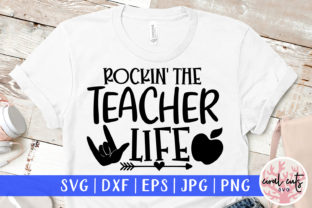
Rockin the Teacher Life: A Designer’s Practical Review
As a professional embroidery designer and product reviewer, I approach every new graphic with a specific question: will this actually stitch out well on a finished product? When evaluating Rockin the Teacher Life, my focus shifts immediately from digital aesthetics to tangible production value. This design falls squarely within the Crafts and Graphics categories, but for those of us running a craft business or managing an Etsy shop, it represents potential inventory. The phrase itself evokes energy, dedication, and a bit of chaotic joy, which sets a distinct mood for any handmade product. However, translating that mood into thread requires careful consideration of layout, density, and end-use application.
First Impressions and Visual Personality
Upon opening the digital assets, the first thing I assess is the visual hierarchy. Rockin the Teacher Life carries a bold, expressive personality that demands attention. It is not a subtle, minimalist mark; it is a statement piece. For an apparel decorator or creative entrepreneur, this matters because the design needs to communicate instantly from a distance. Whether viewed as a printable mockup for social media or stitched onto a sweatshirt, the typography and graphical elements must balance readability with style.
The layout suggests a design that thrives on contrast. In my experience reviewing machine embroidery design files for teacher-themed merchandise, designs with this level of character perform best when they are allowed to breathe. Crowding this graphic with excessive borders or secondary clip art can dilute its impact. As a graphics asset, it feels modern and relatable, targeting a demographic that appreciates humor and recognition. For a small shop product lineup, this design serves as an excellent anchor item because it speaks directly to the wearer's identity.
Real-World Application: The Custom Sweatshirt Test
To truly evaluate this design, I mentally place it in a real-life production scenario. Let’s consider a custom apparel project: a heavyweight cotton sweatshirt intended as a holiday gift or boutique staple. Teachers often prefer comfortable, durable clothing over delicate items, making sweatshirt embroidery a primary use case for Rockin the Teacher Life.
In this scenario, I am looking at how the design interacts with fleece fabric texture. Fleece has a pile that can swallow fine details. If the graphic relies heavily on thin running stitch or tiny serif fonts, the message might get lost after the first wash. However, if the design utilizes adequate satin stitch width or strategic fill stitch areas, it will sit proudly on top of the fabric. For a commercial embroidery project like this, I would likely pair the design with a cutaway stabilizer to prevent puckering, ensuring the finished product maintains a professional, retail-ready appearance. The goal is to create a personalized gift that looks high-end, not homemade.
Performance Across Different Substrates
Versatility is key for any digital embroidery file in a maker's library. While the sweatshirt is a strong contender, Rockin the Teacher Life must be evaluated for other common teacher gifts. Tote bag design is another massive category here. Canvas tote bags offer a stable, flat surface that is generally forgiving for embroidery. However, canvas is dense. When stitching this design on a tote, needle penetration and thread tension become critical factors. I always recommend testing on scrap fabric first to ensure the design doesn't cause tunneling or distortion.
Conversely, using this design for baby embroidery or nursery decor requires a different mindset. If adapting Rockin the Teacher Life for a "Teacher Mom" onesie or baby blanket, the stitch density must be reduced significantly. Baby skin is sensitive, and a dense patch of thread can be scratchy and stiff. In these instances, I look for opportunities to convert fill areas to lighter running stitches or applique design techniques to maintain softness without sacrificing legibility. Always verify that the design scales down effectively; some complex graphics lose their charm when reduced to fit a 4x4 hoop size.
Navigating Fabric Challenges and Limitations
No matter how beautiful the graphics are, physics dictates the outcome. There are specific situations where I would advise caution when using Rockin the Teacher Life:
- Stretchy Performance Fabrics: Unless you are using a specialized adhesive stabilizer and ballpoint needles, high-stitch-count designs can warp athletic wear. Test extensively before committing to a bulk order.
- Curved Surfaces: If applying this to a cap or curved sleeve, ensure the design has been digitized specifically for curves. Flat designs often distort on hats unless re-digitized or arched properly.
- Dark vs. Light Fabrics: Check thread color contrast meticulously. A design that pops on white cotton might disappear on navy blue. You may need to add a white underlay or outline to define the edges on dark backgrounds.
- Textured Linens: For tea towels or pillow covers made of slub linen, the uneven weave can cause registration issues. Use a water-soluble topping to keep the stitches crisp and visible above the fabric texture.
Technical Considerations for Commercial Sellers
For Etsy sellers and small business owners, technical compliance is just as important as aesthetic appeal. It is vital to note that the provided file types for this item are SVG and DXF, compatible with Cricut Design Space and Silhouette Designer Edition. These are vector formats primarily intended for cutting machines or sublimation. If you intend to use this for machine embroidery, you must confirm whether an embroidery-specific format (like PES, DST, or JEF) is included or if you will need to digitize the vector file yourself. Never assume a vector graphic is stitch-ready without verification.
Assuming you have the correct embroidery file or plan to digitize it, consider the licensing. Before listing any finished product derived from Rockin the Teacher Life, review the commercial use terms. Can you sell unlimited physical items? Are there restrictions on digital redistribution? Protecting your business means respecting intellectual property. Furthermore, when creating listings, use high-quality mockups that accurately represent the stitch texture. Buyers trust sellers who show realistic expectations rather than flat digital renders.
Designer Notes for Optimal Results
To maximize the success of your embroidery project, keep these practical tips in mind:
- Stabilizer Selection: Match your stabilizer to the fabric weight. Cutaway for knits and sweatshirts; tear-away for stable wovens like canvas; wash-away for delicate sheers.
- Thread Color Planning: Don’t rely solely on screen colors. Physical thread charts are essential for accurate matching, especially for school colors or specific branding requests.
- Density Check: If digitizing from the provided SVG/DXF, avoid auto-digitizing. Manually assign stitch types to ensure satin stitches aren't too wide and fill stitches have appropriate pull compensation.
- Mockup Testing: Create black and white mockups to test value contrast. If the design reads well in grayscale, it will likely read well in thread regardless of color palette.
- Wash Testing: Always wash and dry a test sample. This reveals whether the stabilizer was sufficient and if the thread colors bleed. Customer trust depends on the longevity of your handmade product.
Evaluating Rockin the Teacher Life through the lens of a professional creator reveals its potential as a standout asset for teacher appreciation merchandise. By respecting the technical requirements of embroidery and understanding the nuances of different substrates, you can transform this digital graphic into a cherished, wearable celebration of the teaching profession. Whether for a custom client commission or your own shop inventory, thoughtful execution is what separates a generic craft from a premium product.